
WASHINGTON — Alaska’s celebrated bike trails are among the six newly numbered paths in the U.S. Bicycle Route System.
But just weeks before that announcement, a task force of transportation experts had to figure out exactly how to include them.
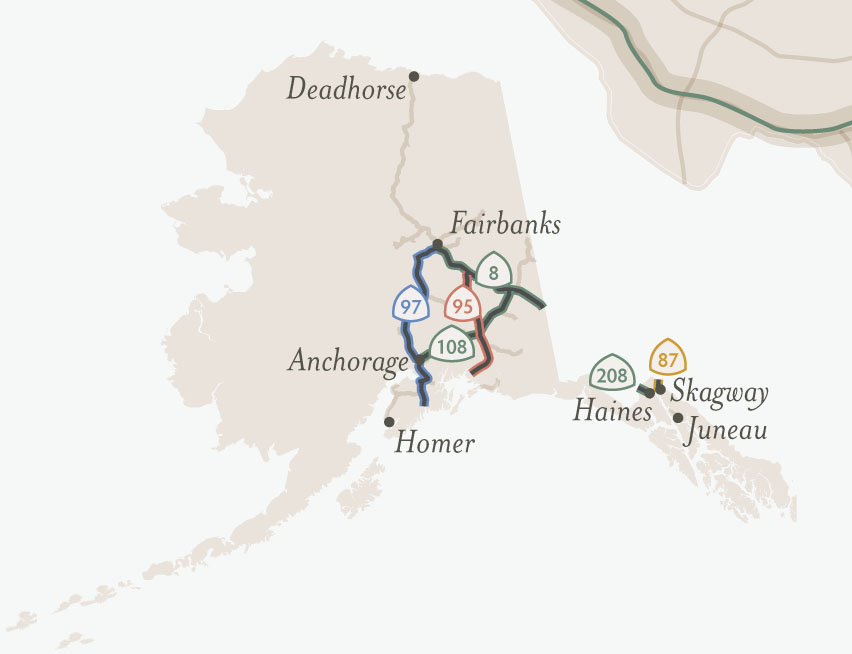
Four the six routes numbered this year are in Alaska.
When Alaska submitted the application last fall, a bicycle route numbering scheme for the state didn’t exist, said Ginny Sullivan, the special projects director for nonprofit American Cycling Association, which approved the routes.
Sullivan said the group didn’t anticipate the state would apply to be part of what they say will be the world’s largest national bike system, thinking “Alaska may want to do something unique to Alaska.”
Alaska did want to be involved – and now the four routes are now among the new arrivals to the revived network, which aims to connect cyclists in the same spirit of the interstate highway system.
Bob Laurie, the Alaska Department of Transportation’s bicycle and pedestrian planner, said a sense of pride was the impetus for including his state in the network.
“I was a little miffed that we weren’t included because Alaska has been a part of this nation for 50 years,” Laurie said.
Laurie got over the slight, though. A task force worked with state officials to designate the routes, including two that will link to Washington State via the Alaska Marine Highway ferry system.
It’s been almost 30 years since the American Association of Highway and Transportation Officials approved the first two routes in Virginia. The momentum for the effort didn’t pick up again until about 2003, when Adventure Cycling and the highway association reached out to state transportation departments, promoting the utility of an interconnected system of bike routes.
“It’s a long-term plan,” said Jim McDonnell, program director for engineering at the highway association. “It’s a lot like designing the original interstate highway system in that it’s a big system that will grow little by little.”
One concern is that cities could still pass no-bike laws, which may supersede the network if there’s no federal protection of the paths. Laurie said he’s working on those issues in Alaska, communicating with city officials regarding the trajectory of routes in their area. He plans to coordinate soon with the metro planning officials in Anchorage.
Officials in that state plan to install signs to mark the routes after traffic engineers determine where and how many signs should go up. The cost of the signs will come from state transportation funds, Laurie said.
Julie Saupe, president of the Anchorage Convention and Visitors Bureau, said the agency plans to use the Bicycle Route System in its promotional material in the future.
“We try to get people up here by plane, by boat, by ferry,” Saupe said. “Certainly we’d love to see more long-distance bicyclists.”
Sullivan said transportation officials in Alaska still need to submit more route details to the highway association and show details of intersections. “We’re really still kind of in the middle of the whole process and they need to map it and promote it so cyclists can use it.”
And while the bicycle system hasn’t encountered resistance at the local level, Sullivan said the largest obstacles exist at the federal level, where some political leaders don’t understand the value of bicycle routes. At some point, she said, “I’m sure we’ll encounter someone who doesn’t want us on their roads.”
That doesn’t seem to be the case yet in Anchorage.
“Our trails are extremely well-used,” Saupe said. “On a nice summer evening, I think you’ll find a bigger traffic jam on our trials than our highways.”