
WASHINGTON — China constructed headquarters for a massive Cambodian-based scam network harming victims and is failing to hold them accountable, according to never-before-revealed findings in a bipartisan congressional investigative report released on Tuesday.
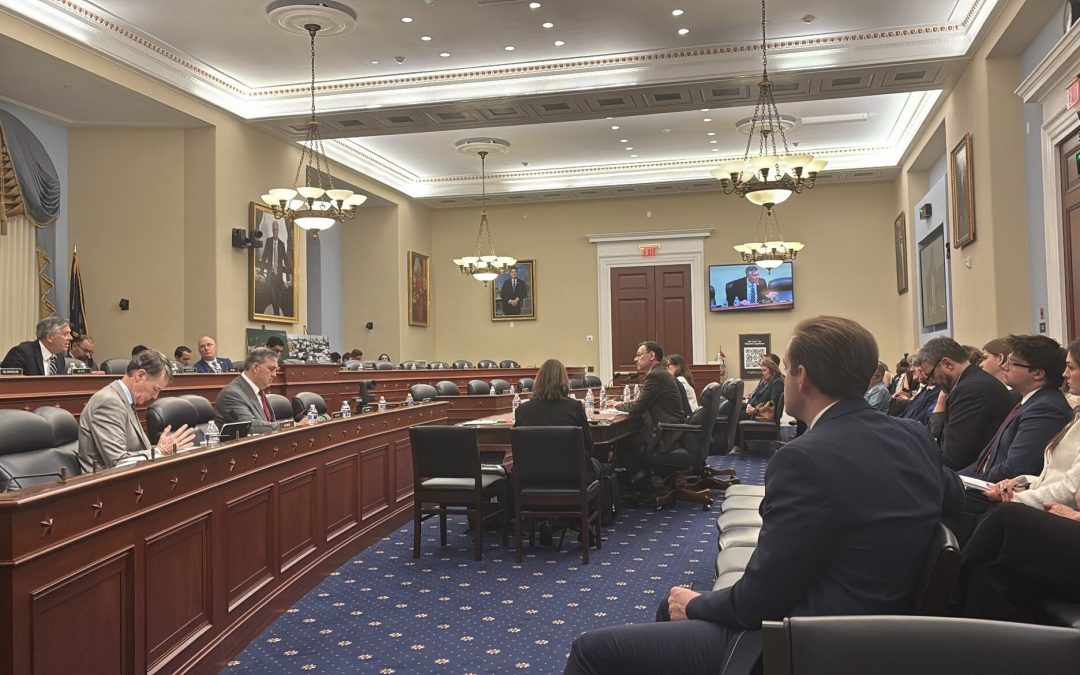
House Republican representatives and a Democratic representative from a select committee focused on U.S. and China competition discussed the implications of the 61-page report. Findings included the “Chinese government’s deliberate failure” to hold the scam network accountable and their involvement in building their compounds, according to Rep. John Moolenaar, R-Mich.
“For the first time, this report includes new findings exposing how a Chinese government-owned company directly contracted with a criminal organization to construct massive scam center compounds in Southeast Asia,” Moolenaar said.
According to Moolenaar, the select committee’s investigation found that although China does not “centrally direct scam compounds,” the scam network has been able to grow due to China not addressing the threat.
In a press release published Tuesday, the select committee concluded that these Chinese-linked scam centers were located in Southeast Asia, notably in Cambodia and Burma.
Additionally, the report describes a connection between China and the Prince Holding Group, a Cambodia-based conglomerate and also referred to as the Prince Group, founded by Chinese-born and Cambodian citizen Chen Zhi.
Zhi was indicted by a U.S. federal court in October 2025 with wire fraud conspiracy and money laundering conspiracy due to his leadership in the organization’s forced-labor scam centers in Cambodia.
“For the very first time, our investigation reveals that the Prince Group’s headquarters in Cambodia was actually constructed by a Chinese state-owned enterprise,” Rep. Ro Khanna, D-Pa. “While there are Chinese ties, the scam is not a vast conspiracy by the Chinese government.”
The report shares that the China Construction Fourth Engineering Division constructed the Prince Group’s Phnom Penh headquarters, according to Chinese corporate disclosures.
In October 2025, the Prince Group faced sanctions from the United States and Europe. Zhi was arrested in Cambodia and extradited to China in January 2026, “at the request of the Chinese government,” according to CNN reporting.
However, the report indicated the select committee views this arrest as strategic. It claims “his extradition to China now certainly implies that any evidence he might hold will remain permanently out of more neutral and transparent court systems.”
Yet the report continues by acknowledging the harm China also endures because of the “Southeast Asia’s scamdemic.”
The report reads, “Chinese citizens were its first and biggest losers – as victims of both trafficking and scams. Moreover, the Chinese state’s role has been and remains ambiguous, acting as both a selective disruptor and opportunistic enabler, sometimes in the same action.”
American victims also face harsh consequences from Southeast Asia-based scam networks, according to the report and representatives during the hearing. The U.S. Department of the Treasury stated in September 2025 that Americans lost an estimated $10 billion or more in 2024 from these networks.
Erin West, the CEO of the global nonprofit Operation Shamrock, which aims to address digital crime, said during the hearing that some American victims are not adequately assisted after they are scammed.
“When they are reporting to law enforcement, they are not getting any help,” Erin West said. “It’s leading them to do their own research and solve their own cases or to simply Google it and find someone who claims they can help them, who is the secondary scam.”
Not only are victims hurt in the scamming process, but so are the scammers because they are tricked into it, representatives said during the hearing and the report stated.
“Our investigation also highlights another horrifying dimension of this ecosystem: forced criminality and human trafficking,” Moolenaar said. “Thousands of victims from across Asia, Africa, Europe, and Latin America have been lured by false job advertisements, stripped of passports, threatened, beaten, and ordered to scam victims online.”
A June 2025 Amnesty International report found that slavery, human trafficking, child labor and torture were issues at over 50 scam compounds in Cambodia.
“It is a crime that has victims not only on U.S. soil,” Rep. Jefferson Shreve, R-Ind., told Medill News Service. “There’s certainly human tragedy in some of the scam centers.”